
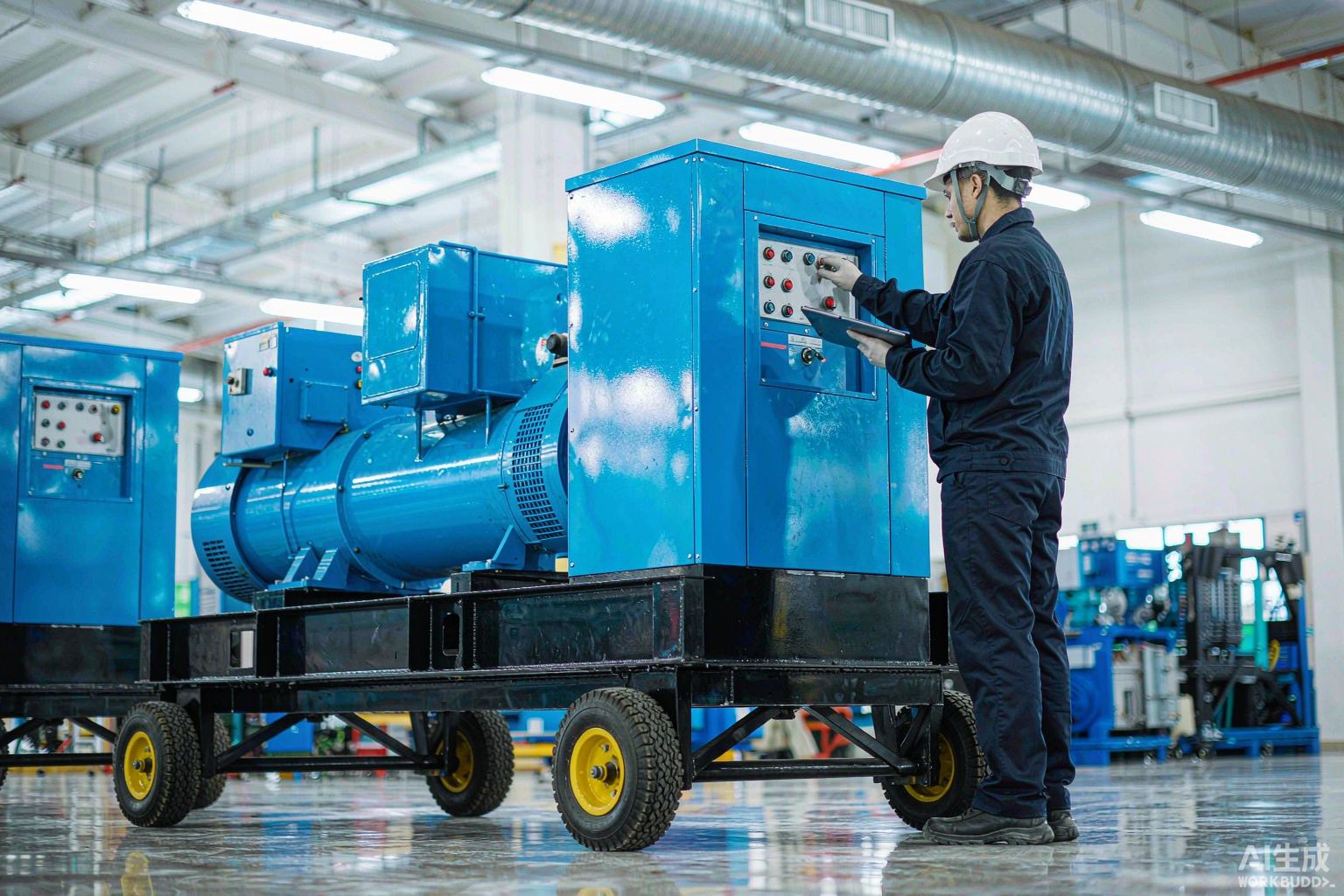
What a Four-Point Load Test Proves Before a Generator Ships
Starting a set and watching the voltage settle proves almost nothing. Here is what a 25 / 50 / 75 / 100 % load test actually measures, and which faults only appear under load.
A set rated at 40 °C does not deliver its nameplate output at 48 °C. Here is how the derate is calculated, and what changes in the specification.

Generator ratings are quoted at reference conditions: usually 25 °C air inlet, 100 m altitude and a defined relative humidity. Move the installation to a Gulf port in July, or a mine at 1,800 m, and the same machine delivers less. The question is how much less — and whether the package was specified for it.
Two limits move with ambient temperature. The first is the engine's combustion air: hot air is less dense, so each intake stroke draws fewer oxygen molecules and less fuel can be burnt for the same smoke limit. The second is the cooling system: a radiator sized for a 40 °C rise cannot reject the same heat when the air entering it is already 48 °C.
The alternator has its own limit. Winding insulation is rated to a temperature class, and higher inlet air means a smaller margin before that class is reached. This is why an alternator can become the binding constraint on a hot site even when the engine still has headroom.
Most manufacturers publish a derating curve. As a working approximation for turbocharged engines in the 100–800 kVA band, expect roughly 1 % of rated output per 1 °C above the reference inlet temperature, and a little more once the enclosure is taken into account. Altitude adds its own penalty from about 1,000 m upward.
| Site condition | Indicative effect on declared output | What to change |
|---|---|---|
| 40 °C ambient, open set | reference case for most tropical ratings | nothing |
| 45 °C ambient, open set | roughly 4–6 % below the 40 °C figure | confirm radiator selection; consider larger alternator frame |
| 48–50 °C, inside canopy | can exceed 10 % lost against a temperate rating | high-ambient radiator, canopy ventilation, remote radiator |
| 1,500 m altitude | additional loss on top of the temperature derate | altitude-compensated fuel setting, turbo match |
A canopy protects the machine from rain and dust, and traps its heat. A silent canopy with a carefully designed air path can be excellent; a generic canopy with undersized louvres is a thermal trap. On hot sites we look at three numbers together: total airflow through the canopy, the temperature rise from inlet louvre to radiator face, and the recirculation path that lets hot discharge air return to the intake.
The common fixes are unglamorous and effective: larger inlet and outlet areas, a ducted discharge, a gasket seal between radiator and canopy, and in extreme cases a remote radiator outside the acoustic envelope.
Writing the requirement as "600 kVA at 48 °C" forces the supplier to prove the number rather than quote a catalogue figure that applies to a European spring.
Often yes, and it is a legitimate approach — but check the cooling system as well as the rating. Buying a larger set with the same radiator package can still overheat.
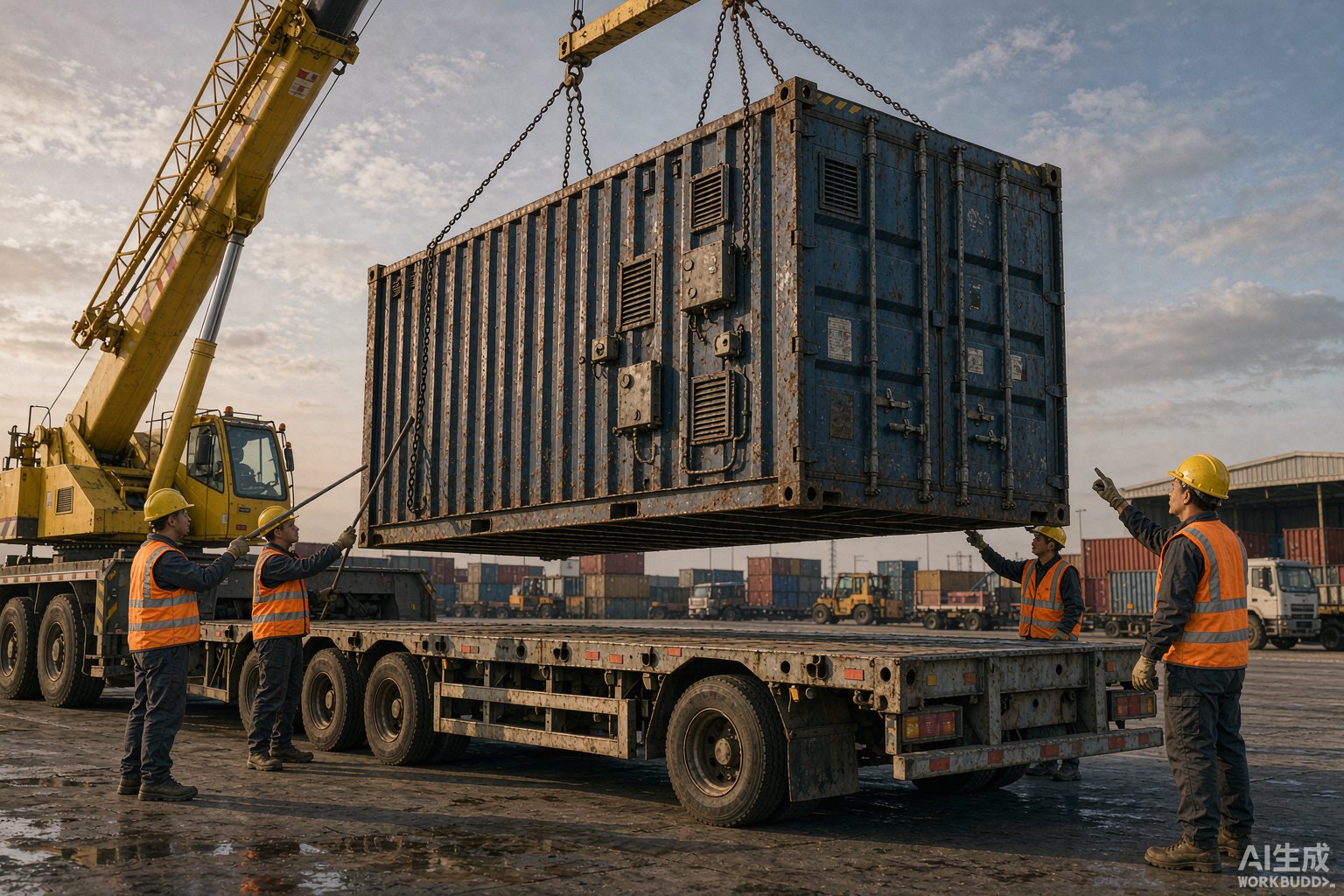
ISO containers can be very good thermally when the airflow is designed, and very bad when it is not. The container is not a cooling solution by itself; the louvre area and discharge path are.
They run hotter unless the acoustic design includes the airflow to compensate. Good silent packages are tested at full load in high ambient; that test is the evidence to ask for.
Starting a set and watching the voltage settle proves almost nothing. Here is what a 25 / 50 / 75 / 100 % load test actually measures, and which faults only appear under load.
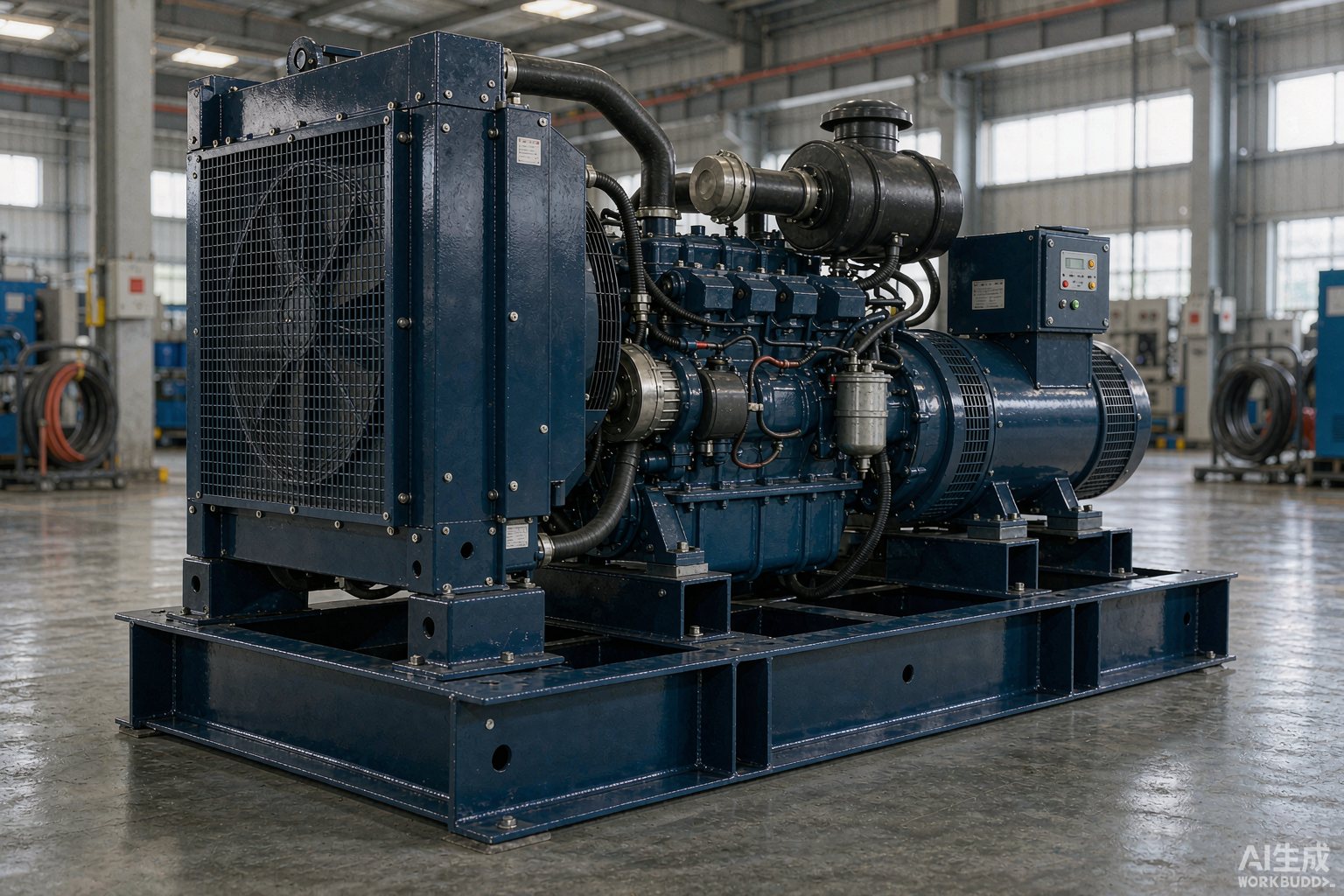
The same engine can be sold at three different ratings. Picking the wrong one either wastes capital or shortens engine life — and the difference is measured in hours per year.
Buying the next size up feels safe. In practice it moves cost from the capital budget into fuel, maintenance and premature engine wear — and it rarely improves reliability.
Send the load schedule, site conditions and destination port. We answer technical questions directly, usually within one business day.